You might know this disease better by its nickname mono Its also called the kissing disease because of one way you can spread it to. Epstein-Barr virus EBV is a primary cause of infectious mononucleosis IM and is globally associated with various malignancies most notably post-transplantation lymphoproliferative disease PTLD de novo Hodgkinnon-Hodgkin lymphoma HLNHL and nasopharyngeal carcinoma NPC Despite the development of preventive vaccines against other malignant viruses 2 5 and notwithstanding.
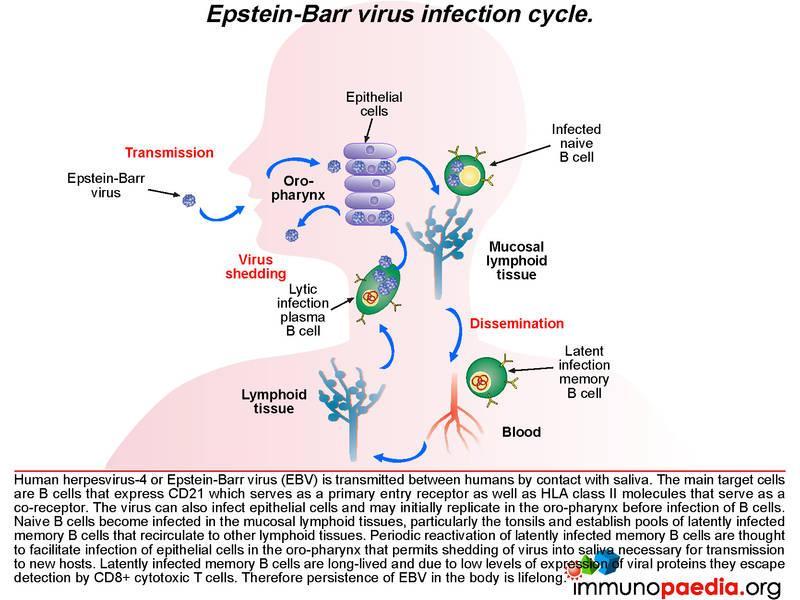 Epstein Barr Virus Ebv Immunopaedia
As of 2016 a vaccine against EpsteinBarr virus was not yet available.

Epstein barr vaccine. Epub 2015 May 5. Currently there is no licensed vaccine for EBV. Monovalent H1N1 influenza vaccine.
The Epstein-Barr virus EBV is an oncogenic γ-herpesvirus that is endemic in human populations worldwide 1. Epstein-Barr is the virus that causes mononucleosis. A vaccine that consisted of a peptide that corresponded to an EBV nuclear antigen EBNA-3 expressed in tumor cells and tetanus toxoid in a water-oil adjuvantdesigned to induce T celldriven.
Epstein-Barr virus EBV also known as human herpesvirus 4 is a member of the herpes virus family. EBV infections are very common youve probably already contracted the virus without even knowing it. The oncogenic potential of EBV was first suggested through its association with Burkitt lymphoma 2 and by its ability to transform B cells in vitro 3 4.
EBV may trigger some cases of lupus say NIH-supported researchers. Authors Y Himuro 1. Most people get infected with EBV at some point in their lives.
Epstein-Barr virus protein can switch on risk genes for autoimmune diseases. The ubiquitous herpesvirus oncogenic Epstein-Barr virus. November 7 2011 An Epstein-Barr virus EBV vaccine in the early phases of development may prove able to prevent infectious mononucleosis and EBV-associated cancers without necessarily.
Nordin JD Kharbanda EO Vazquez-Benitez G et al. A far-reaching study conducted by scientists at Cincinnati Childrens reports that the Epstein-Barr virus EBVbest known for causing mononucleosisalso increases the risks for some people of developing seven other major diseases. Kawai AT Li L Kulldorff M Vellozzi C et al.
EBV is found worldwide and is a common cause of viral pharyngitis especially in young adultsEBV is transmitted from person to person and then infects human B cells which in turn spread the infection throughout the entire reticuloendothelial system RES or the liver spleen and peripheral lymph nodes. Currently there is no licensed vaccine for EBV. There are preventive vaccines against other cancer-causing viruses including hepatitis B which can cause liver cancer and human papillomavirus or HPV which causes cervical cancer as well as some cancers of the penis anus vagina vulva mouth and throat.
Epstein-Barr virus EBV is a member of the herpesvirus family that can infect humans. A nanoparticle Epstein-Barr virus glycoprotein gHgL vaccine elicits antibodies that mediate cell typeindependent protection from infection. Hypersensitivity to influenza vaccine in a case of Epstein-Barr virus-associated T-lymphoproliferative disorder Br J Dermatol.
EBV is found all over the world. Almost 95 per cent of adults carry the Epstein-Barr Virus EBV EBV causes glandular fever also known as the kissing disease Depending on the carrier responses to EBV can range from no symptoms to extreme illness EBV is spread orally primarily through saliva. There is no licensed vaccine against EBV.
The virus is associated with certain cancers nasopharyngeal and gastric of epithelial cells which form the lining of the bodys surfaces as well. It is one of the most common human viruses. EBV spreads most commonly through bodily fluids primarily saliva.
The virus is associated with certain cancers nasopharyngeal and gastric of epithelial cells which form the lining of the bodys surfaces as well as Burkitt and Hodgkin lymphomas which are cancers of the immune systems B cells. The Epstein-Barr virus EBV is a member of the herpes virus family human herpesvirus 4. The virus establishes latent infection and causes infectious mononucleosisIt is a dual-tropic virus causing infection of both B cells and epithelial cellsOne challenge is that the EpsteinBarr virus expresses very different proteins during its lytic and its latent phases.
A vaccine is currently unavailable. Epstein-Barr virus EBV is the primary cause of infectious mononucleosis and is associated with several malignancies including nasopharyngeal carcinoma gastric carcinoma Hodgkin lymphoma Burkitt lymphoma and lymphomas in immunocompromised persons as well as multiple sclerosis. Absence of associations between influenza vaccines and increased risks of seizures Guillain-Barré syndrome encephalitis or anaphylaxis in the 2012-2013 season external icon.

